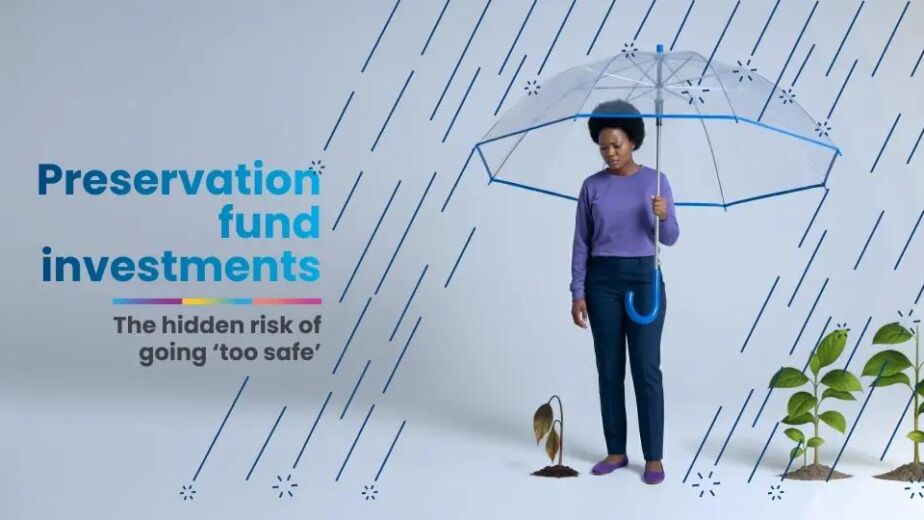
Closing an investment is often treated as the finish line.
In reality, it is the moment when risk management truly begins.
Deploying capital is a decision.
Protecting capital is an ongoing discipline.
That distinction separates investors who make good investments from investors who consistently build durable portfolios.
The illusion of completion
Many investment processes are designed around a single milestone: closing the transaction.
Months of due diligence.
Financial modeling.
Negotiations.
Legal documentation.
Capital allocation.
Once the transaction closes, there is often a subtle psychological shift.
The investment is considered complete.
From an accounting perspective, perhaps.
From a risk perspective, not even close.
Every investment immediately enters an environment that continues to evolve.
Markets change.
Management teams change.
Interest rates change.
Regulation changes.
Competition changes.
Even the investor’s own objectives may change.
Risk never pauses simply because the documents have been signed.
Risk is dynamic, not static
One of the most common misconceptions in investing is that risk can be fully measured before capital is committed.
It cannot.
Initial underwriting captures what is known today.
Future risk emerges from what changes tomorrow.
This distinction is fundamental.
An investment can be perfectly underwritten based on available information and still become materially riskier as conditions evolve.
The investment itself may not have changed.
Its environment has.
Disciplined investors recognize that underwriting is a snapshot.
Risk management is a continuous process.
Stewardship creates resilience
Owning an asset is different from managing an investment.
Ownership transfers capital.
Stewardship requires continuous judgment.
Professional investors continuously reassess questions such as:
- Has the original investment thesis changed?
- Have new risks emerged?
- Has liquidity deteriorated?
- Has leverage increased?
- Have macroeconomic conditions altered expected outcomes?
- Does this investment still serve the same strategic purpose within the portfolio?
None of these questions existed only on closing day.
They exist throughout the life of the investment.
Stewardship transforms investing from a transaction into an adaptive decision making process.
Time creates new information
Every investment accumulates information after closing.
Operating performance.
Market behavior.
Management execution.
Competitive dynamics.
Capital market conditions.
The highest-quality investors are not those who never change their minds.
They are those who systematically integrate new information without abandoning disciplined thinking.
Updating an investment thesis is not evidence that the original analysis failed.
It is evidence that decision making continues.
Markets reward adaptability far more consistently than certainty.
Monitoring is not micromanagement
Some investors hesitate to review investments too frequently.
Others monitor every short term fluctuation.
Neither extreme creates better decisions.
Effective monitoring is not about reacting to noise.
It is about distinguishing between volatility and structural change.
Price movements are information.
They are not always signals.
A disciplined review process asks whether the original assumptions remain valid not whether today’s market agrees with yesterday’s valuation.
The objective is not constant activity.
The objective is continuous awareness.
Governance is an investment advantage
Institutional investors rarely outperform because they predict markets more accurately.
They often outperform because they follow more disciplined governance processes.
They define review schedules.
They establish decision thresholds.
They document assumptions.
They revisit risks systematically.
They reduce the influence of emotion by replacing improvisation with process.
Governance does not eliminate uncertainty.
It improves decision quality when uncertainty inevitably arrives.
Risk management is therefore less about forecasting and more about building systems that continue making sound decisions over time.
Actionable Takeaways
Before considering an investment “finished,” ask:
- What assumptions should be reviewed periodically?
- Which indicators would invalidate the original thesis?
- What new information deserves action and what merely deserves observation?
- How frequently should the investment be reassessed?
- Who is responsible for challenging the original assumptions rather than defending them?
The goal is not constant intervention.
The goal is disciplined adaptation.
Closing Reflection
Investors often believe risk is something that should be minimized before investing.
In reality, most investment risk emerges after capital has already been deployed.
The question is no longer whether uncertainty exists.
The question is whether your decision-making process evolves as uncertainty unfolds.
Successful investing is not defined by making one correct decision.
It is defined by making a sequence of disciplined decisions as reality changes.
Risk management is not the act of avoiding uncertainty; it is the discipline of continuously updating decisions as uncertainty reveals itself.
References
These references support the principles of continuous risk management, adaptive decision making, governance, portfolio oversight, and investment stewardship:
- Howard Marks — The Most Important Thing. A foundational work that explains why successful investing depends on continuously reassessing risk rather than assuming initial analyses remain permanently valid.
- Nassim Nicholas Taleb — Antifragile. A foundational work that explores adaptation, uncertainty, and how resilient systems evolve by responding intelligently to changing conditions rather than relying on static forecasts.
- Frank H. Knight — Risk, Uncertainty and Profit. A classic reference that distinguishes measurable risk from evolving uncertainty, reinforcing why investment decisions require ongoing reassessment over time.
- Richard C. Brealey, Stewart C. Myers & Franklin Allen — Principles of Corporate Finance. A foundational reference that examines capital allocation, corporate governance, monitoring, and the continuous management of financial risk throughout an investment’s life cycle.
Question for Reflection
If your portfolio were reviewed today as if every position were a new investment, which holdings would still earn your capital and which remain only because you already own them?